
Amendment 83: A constitutional change with lasting consequences
Hunting is already legal under Colorado law. So why put it in the Constitution?
There is no statewide ballot measure to ban hunting. No statewide proposal to shut down fishing.
Amendment 83 would do more than protect these activities. It would give hunting and fishing constitutional status to make them the “preferred means” of managing wildlife.
That is not about preserving tradition. It is about changing the rules for how Colorado manages wildlife. Managed by hunters, not biologists.
Colorado’s Constitution should protect fundamental rights—not lock specific wildlife-management priorities into our highest legal document.
Coloradans deserve to understand the lasting consequences before changing the Constitution.
Fake threat. Real amendment. Permanent power grab.

Heritage is Not Entitlement

Taxpayers Foot the Bill

Brace yourselves for a TAXPAYER NIGHTMARE
States that have already adopted broad "right to hunt/trap" amendments have seen costly litigation that never ends.
Colorado's Constitution is already one of the most amended in the nation. Adding more ambiguous language only increases the risk of legal chaos and fiscal waste.

Expect years of litigation, millions in taxpayer funded defense costs, uncertainty for agencies, landowners and conservation groups. When vague or overly broad "rights" are added to a constitution, courts must interpret them.
Examples of litigious "right to hunt" suits include:
~ North Carolina faces multiple lawsuits after it's amendment passed in 2018, including challenges over wildlife management authority and conflicts with existing constitutional provisions.
~Wisconsin's Department of Natural Resources was sued by Hunter Nation over the wolf hunt and argued the agency violated state law and Wisconsin's constitutional right to hunt. The court orderded DNR to hold the hunt, contrary to science-based management practices.
~Tennessee and Louisiana both experienced long legal disputes over how the new constitutional language interacted with exitsting wildlife statutes.
Amendment 83 will bring Colorado Parks & Wildlife and all Colorado residents more lawsuits over seasons, trapping, species protection and CPW authority. More bureaucracy and more tax dollars wasted could reach into millions of dollars quickly. That's just the legal cost. CPW staff time, delays and lost wildlife work will cost Coloradans even more.
Hunting isn't Management • Power Grab • Hunting isn't Science

Banned Trapping Devices May Be Coming Back


Cruel TRAPPING METHODS could return to our lands.
These "traditional" trapping methods, touted as "heritage" harm more than the intended animal. When a pet or human is injured or killed by one of these traditional traps, its called a by-catch. These brutal traps endanger not only wild animals that aren't the target, including those considered endgangered but also the pets of millions of visitors who spend time on Colorado's public lands each year.
There are an alarming number of incidents in other states in which pets have been killed. In December 2022, for example, a three-year-old Shetland sheepdog died after her neck was caught in a Conibear trap near a wooded trail in Vermont—the state’s 13th incident of a pet being caught in a trap that year. In 2020, Minnesota's Department of Natural Resources reported 161 dogs caught in traps, with at least 35 fatalities in the span of just a couple of years. A tragic incident on January 8, 2026, caught global attention when a two-year-old Siberian Husky named Moon was caught and killed by a baited Conibear fur trap in British Columbia. Don't allow "The Right to Hunt" weaken Amendment 14, that Colorado voters passed to avoid these tragedies.
Amendment 83, The Right to Hunt, uses vague language like "traditional methods" and "preferred means" to try to undo Colorado's 1996 trap ban. This language could force the state's hand on trapping even when it doesn't make sense. That means more conflict, more pressure on wildlife, more danger to pets and people and more decisions made in courtrooms instead of by wildlife experts and biologists.
Colorado voters banned commercial and recreational leghold trapping in 1996 because these devices cause prolonged suffering, kill non-target wildlife and pose risks to pets and people. Because Amendment 14's trap ban is older and Amendment 83 would create a newer constitutional right to "harvest" wildlife with ambiguous words like "traditional methods," courts could be forced to reconcile them. Colorado precedent shows that the newer amendment tends to override the older amendment. That means Amendment 14 could be narrowed, carved up with exceptions or partially overridden to make room for 83's right to harvest language depending on how the courts decide the definition of "traditional methods".
If this amendment passes, trapping groups could argue that:
-
Colorado's ban on leghold traps burdens their constitutional right
-
Colorado Parks & Wildlife cannot restrict certain methods without facing constitutional challenges
-
Courts, not biologists or the voters, should decide what wildlife killing-devices are allowed
Even if the existing leghold trap ban survives, the lawsuits alone could cost the state millions and tie up CPW's ability to enforce humane wildlife protections.
To avoid litigation costs, the State of Colorado and CPW might be forced to settle on lawsuits that are financially backed by out of state, big money hunting membership groups. This effectively handcuffs CPW and wildlife biologists from making sound science-based wildlife decisions.
Don't let this become your child's memory of a day out for a hike.
Heritage isn't Entitlement • Power Grab • Hunting isn't Science

Lawsuits Will Handcuff Wildlife Commission

"Right to Hunt" amendments effectively handcuff wildlife commissions and biologists by stripping them of their authority to use localized, science-based data to manage animal populations. By elevating hunting from a regulated management tool to an untouchable constitutional right, these policies favor special interests over dynamic ecological conservation.
Wildlife populations, diseases, and habitat conditions fluctuate continuously. Because of this, state wildlife commissions rely on adaptive management—the ability to adjust hunting seasons, quotas, and methods based on the most recent biological surveys. Constitutional "Right to Hunt" amendments often permanently lock specific, traditional hunting methods (like trapping) into state law. If biologists determine a specific method is causing localized over-harvesting or spreading disease, they cannot ban it without triggering a massive, often impossible, constitutional obstacle.
Wildlife biologists are tasked with managing ecosystems for all citizens, including hikers, photographers, and non-hunters. Elevating a specific recreational activity to the same constitutional tier as fundamental civil rights (such as free speech) essentially turns hunting into a superior interest. This allows special interest groups to tie up state wildlife commissions in endless litigation, claiming that any new conservation regulation (like closing an overhunted area or limiting tag numbers to protect a dying herd) infringes upon their constitutional rights.

Heritage isn't a Management Qualification • Power Grab • Hunting isn't Science

Right to Hunt in Colorado: Floodgates Open to Out-of-State Lobbyists

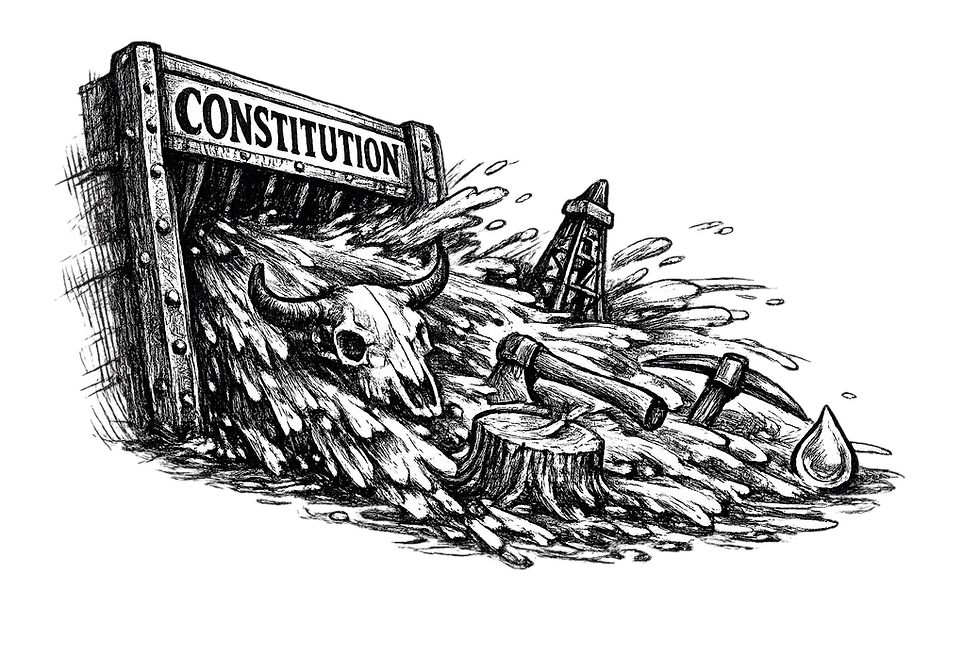
The Right to Hunt: A Trojan Horse in Our Constitution
One trapping/hunting lobby today.
OUTSIDE INDUSTRIES TOMORROW.
This amendment opens the door for industry-driven constitutional rights, including:
-
Oil and gas extraction rights
-
Mining rights
-
Public land demands from corporate entities
-
Timber harvesting rights
-
Water use rights beyond existing law
Once the constitution becomes a battleground for private interests, every industry will want its own protected "right", making Colorado's foundational document longer, more contradictory, harder to govern and more vulnerable to lawsuit, opening the floodgates for powerful lobbies to rewrite our Constitution for their own benefit rather than the public good.